"Well I know what I've been told,
 you gotta know just when to fold.
But I can’t do this all on my own.
No, I know, I’m no Superman"
Laslo Bane
We each have our own 'wagon' which is full of our own individual 'stuff''. The word 'wagon' reminds us that we tote around a sort of 'pile' that really consists of who we are and how we want to represent ourselves to the world at large. Just like a little kid walking down the street with his toys in his Radio Flyer, a wagon contains the items we would like to showcase and to have others admire about us. Children cart around dolls, toys, tools and other objects of interest that they intend to share and with which they have some sort of connection or relationship. Adults have a different sort of display but we also need a wagon to cart our display items around in and to help us to relate to other people and their wagon loads of their stuff.
What happens when two people meet up with each other is that each agrees to share, discuss, defend and even swap some of the 'stuff' in each others lives. If each person finds enough common ground and joy in the exchange, they may decide to make a commitment. Marriage is one such vehicle and sometimes marriage can be referred to as 'hitching' one person's wagon to another person's wagon.
"A study done by a pair of Canadian psychologists uncovered something fascinating about people at the racetrack. Just after placing a bet, they are much more confident of their horse's chances of winning than they are immediately before laying down that bet. The reason is that we have a nearly obsessive desire to be (and to appear) consistent with what we have already done. Once we have made a choice or taken a stand, we will encounter personal and interpersonal pressures to behave consistently with that commitment. Those pressures will cause us to respond in ways that justify our earlier decision."
'The Psychology of Influence', by Dr. Robert Cialdini
This analogy can easily explain some of the seemingly strange choices we make in life. Why would your daughter choose a drug addicted boyfriend with no prospects in life to marry and raise a family with? Why pay good money to own a car that you can't afford? Why choose a job that pays poorly and offers no opportunity for advancement? What is it about that particular girl's wagon that made my son want to hitch his wagon up to hers? According to this social psychologist, as human beings we are all hard wired to pursue consistency even in the face of a choice which seems to make no sense. Once we have made that commitment we have to fight against everything, (often including ourselves) to unhitch our emotional wagon and move on.
When my daughters choose their boyfriends in the years to come I am going to try and help them realize that they, too are wired for consistency and that they have choices that do not require commitment. Then I'm going to pray.....


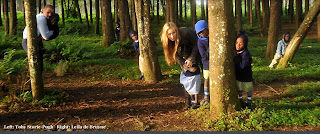 Toby Storie-Pugh is co-founder of Flying Kites. When he is not in Kenya with Leila and their volunteer caregivers, he focuses his rescue efforts on the dying, abandoned and abused children in the slums of New Delhi, India. We recieved word that for the past month Toby has been living with the children who sleep on the railway platform in New Delhi. When the trains come in they dispense some of their left over food to the abandoned children. Toby is currently living in the train station comforting, feeding and protecting the children he has met there while using his cell phone to organize local volunteers and rescue efforts to support still more children.
 n India and in Kenya. Toby and Leila do not have apartments of their own and they do not own cars or have regular jobs, health insurance or retirement plans. Both are college educated and have supportive families and friends but choose to live and work abroad with their orphaned children, to be close to them every day. Individuals, groups and corporate sponsors interested in conributing toward their extrordinary efforts with the most neglected and abused children in the world may contact them through their website:



 Posts
Posts